Publication
Frida Kahlo, Artistic Monuments, and the Right to Permanently Export – Mexican Supreme Court to Consider the Scope of Executive Regulatory Power in the Face of Federal Statute
The Mexican Supreme Court recently accepted a petition to consider whether a 1984 Presidential Decree prohibiting permanent export of Frida Kahlo’s works runs afoul of the 1972 federal Law on Archaeological, Artistic and Historic Monuments and Zones, which permits the temporary and permanent export of privately owned artistic monuments. Mexico declared Kahlo’s entire artistic output to be an Artistic Monument of the Nation in 1984 (Monumento Artístico).
The case arises from an unsuccessful application by Banco Ve por Más acting in its fiduciary capacity to permanently export Kahlo’s Self-Portrait with Medallion (1948).
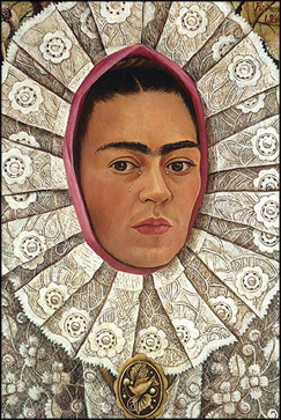
The National Institute of Fine Arts and Literature (INBAL) denied the request citing, among other reasons, the 1984 Presidential Decree prohibiting permanent export of Kahlo’s works. Banco Ve por Más subsequently filed a Constitutional protection action (Amparo) before the District Court challenging INBAL’s decision. That challenge failed. The Mexican Supreme Court, in an 8 to 1 vote, then accepted the case for review, sua sponte, characterizing the case as one of “national importance”.
The Constitutional Issue
The narrow legal issue before the Supreme Court is the extent of presidential regulatory power over the artistic monument output of a single artist in the face of a federal regulatory law governing all artistic monuments.
More broadly, the Supreme Court’s decision may also provide guidance regarding the relationship between private property rights in protected cultural property and the State’s interest in protecting cultural patrimony, preventing the fragmentation of a shared national heritage, and ensuring that culturally significant works remain accessible for education, research, and public appreciation.
In addition to Frida Kahlo, other Mexican artists’ works have been declared artistic monuments (Monumento Artístico) of the Mexican Nation and subject to the same permanent exportation prohibition at issue. Artists include José María Velasco (1943), José Clemente Orozco and Diego Rivera (1959), Dr. Atl (1964), David Alfaro Siqueiros (1980), Frida Kahlo (1984), Saturnino Herrán (1988), Remedios Varo (2001), and María Izquierdo (2002). Vladímir Kibalchich Rusakov received a provisional declaration in 2023.
As of the date of this Legal Alert, the Mexican Supreme Court has yet to issue a ruling on whether the 1984 Presidential Decree regarding Kahlo’s works exceeds executive regulatory authority. The Supreme Court has only assumed jurisdiction; briefing and oral arguments on the merits are still ahead.
Broader Context
The Court’s decision to review the Banco Ve por Más case comes at a time of heightened public sensitivity in Mexico concerning the permanent export of Mexican artworks declared to be Artistic Monuments.
A well-known collection assembled by Natasha and Jacques Gelman, containing approximately 160 works of twentieth-century Mexican art (including 18 works by Frida Kahlo) was recently approved for exhibition outside of Mexico. Critics argued that repeated temporary export authorizations for the collection could serve as a permanent export permit for all practical purposes. That government approval is being hotly litigated in the Mexican courts.
To place the significance of the dispute in context, there are about 152 known paintings by Kahlo worldwide; 25 to 34 of them are in Mexico; only seven of those works are in Mexican State museums. The rest are in private Mexican collections.
The Takeaway for Collectors and Museums:
- The anticipated ruling on Kahlo’s works, depending on the Mexican Supreme Court’s reasoning, may provide broader guidance to all officially declared Mexican artistic, archaeological, or historic monuments and their ability to be temporarily and permanently exported from Mexico.
- A ruling overturning or limiting the 1984 Presidential Decree on permanent export of Kahlo’s works and the prospect that permanent export might be obtained subject to INBAL approval, could materially affect the market for Kahlo’s works in Mexico. A permanent export restriction that excludes works from international markets and narrows the pool of potential buyers tends to weigh on value; a decision reducing that uncertainty could carry material market significance. The highest prices for Kahlo’s paintings have consistently been realized outside of Mexico. Kahlo’s two highest sale results, Diego y yo ($34.9 million, 2021) and El sueño (La cama) ($54.7 million, 2025), were both set in New York.
About Snell & Wilmer
Founded in 1938, Snell & Wilmer is a full-service business law firm with more than 550 attorneys practicing in 17 locations throughout the United States and in Mexico, including Phoenix and Tucson, Arizona; Los Angeles, Orange County, Palo Alto and San Diego, California; Denver, Colorado; Washington, D.C.; Boise, Idaho; Las Vegas and Reno-Tahoe, Nevada; Albuquerque, New Mexico; Portland, Oregon; Dallas, Texas; Salt Lake City, Utah; Seattle, Washington; and Los Cabos, Mexico. The firm represents clients ranging from large, publicly traded corporations to small businesses, individuals and entrepreneurs. For more information, visit swlaw.com.