Publication
Hot News in Creditor-Side Auto Financing: Rising Risks and Emerging Opportunities
The auto finance industry is facing a turbulent period as economic pressures, regulatory scrutiny, and technological disruption converge. For creditors—which include banks, credit unions, captive lenders, and finance companies—the current environment demands agility and risk management like never before. Here’s a look at the most pressing developments shaping creditor-side auto financing.
Affordability Crisis Driving Longer Loan Terms
Vehicle affordability remains a critical challenge for many buyers. The average price of a new car now exceeds $50,000, pushing more buyers to stretch loan terms to longer durations. Data shows the average loan length has climbed to 69 months, with 84-month loans accounting for 22% of new originations—a record high. While longer terms ease monthly payments, they increase total interest costs and negative equity (where the vehicle and the loan are “upside-down”) risk, creating a greater long-term exposure for lenders.
Negative equity is already on the rise, with 28% of trade-ins underwater, averaging $6,905 more owed than the vehicle’s value. For creditors, this trend complicates repossession recoveries and residual value forecasting.
Delinquencies Hit Record Highs Among Subprime Borrowers
One of the most alarming trends for lenders is the surge in auto loan delinquencies. According to Fitch Ratings, 6.65% of subprime auto loans were at least 60 days past due in October, the highest level since records began in 1993. This spike underscores the financial strain on lower-income consumers amid rising living costs and shrinking savings. By contrast, prime borrowers remain largely stable, with delinquency rates holding at 0.37%.
The implications for creditors are significant. Elevated defaults increase charge-off risk and pressure on collections, particularly for lenders heavily exposed to subprime segments. Bankruptcy filings by subprime-focused lenders such as Tricolor and PrimaLend further highlight the fragility of this market.
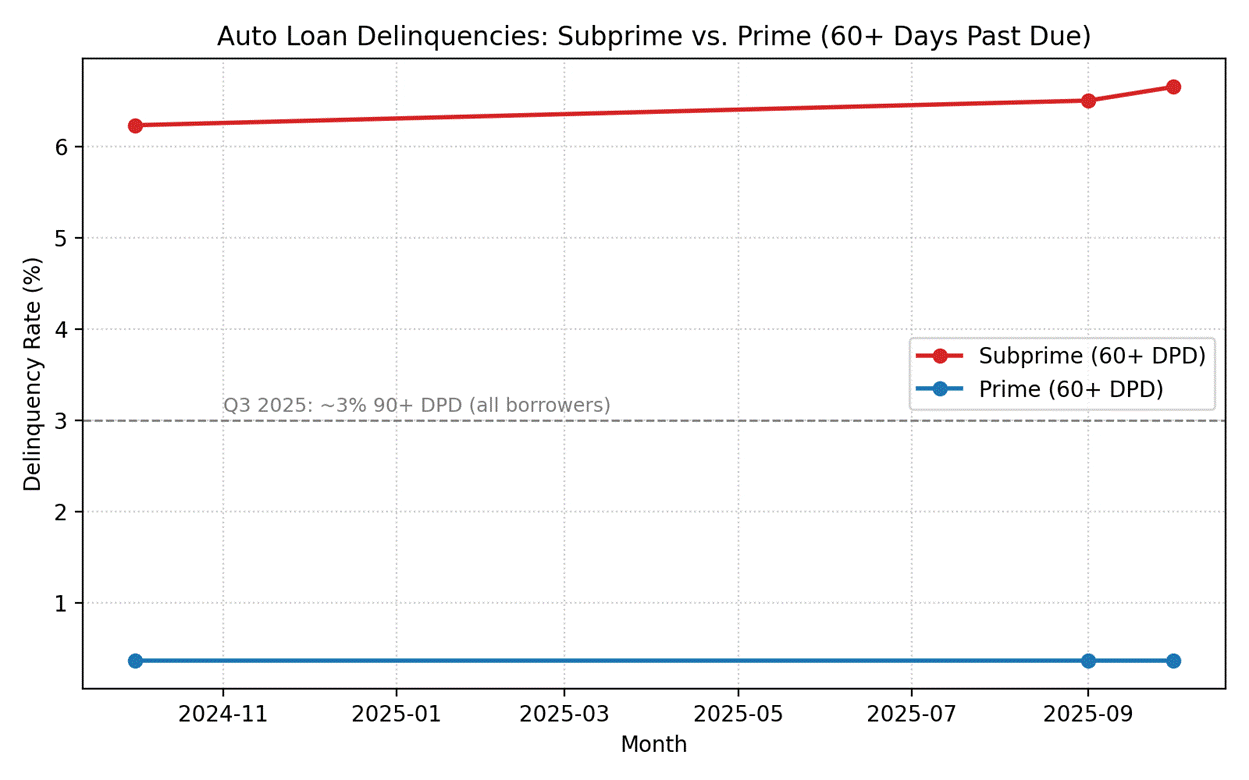
What the chart shows:
- Subprime (60+ days past due): Rose from 6.23% (Oct 2024) to 6.50% (Sep 2025) to 6.65% (Oct 2025)—a record in Fitch data back to 1993.
- Prime (60+ days past due): Flat at 0.37% across the same periods.
- Dashed line (context): ~3% 90+ days past due (all borrowers, Q3 2025)—highest since 2010, based on New York Fed data cited in reporting.
Credit Conditions Loosen Despite Higher Risk Appetite
Interestingly, lenders are responding to affordability pressures by loosening credit standards. October data from Dealertrack shows credit availability improved 4.1% year-over-year, even as approval rates fell to 72.6%. Subprime lending rose to 15.1% of originations, and loans with terms of 72 months or more reached 27.5%. Down payment requirements also declined, signaling a willingness among creditors to take on more risk for growth.
This strategy, while boosting volume, raises concerns about portfolio performance if economic conditions deteriorate further. Creditors must balance growth ambitions with prudent risk management, leveraging advanced analytics to monitor borrower behavior and early warning indicators.
Regulatory Spotlight Intensifies
The regulatory environment is heating up. The Consumer Financial Protection Bureau (CFPB) has zeroed in on auto finance practices, citing issues such as deceptive APR disclosures, wrongful repossessions, and misallocation of payments. The Bureau’s latest Supervisory Highlights “Special Edition Auto Finance” warns lenders about compliance failures that could lead to enforcement actions and reputational damage.
Additionally, the CFPB is reviewing its “larger participant” rule, which determines which indirect auto lenders fall under its supervisory authority. Industry groups are lobbying to limit federal oversight, while state regulators push for stricter standards. This tug-of-war could reshape compliance obligations for many creditors in 2026 and beyond.
Interest Rate Dynamics: Relief and Complexity
After aggressive rate hikes in 2022–2023, the Federal Reserve has eased its stance, cutting rates to a 3.75–4% target range. Average auto loan rates have moderated to 6.35% for new cars and 11.62% for used cars, down from recent highs. However, tariffs on imported vehicles and parts are adding cost pressures, complicating affordability and loan pricing strategies.
For creditors, interest rate volatility underscores the need for flexible pricing models and proactive portfolio stress testing. Longer-term loans amplify overall interest rate risk, making accurate forecasting essential.
Technology: The Game-Changer for Creditors
While economic and regulatory challenges dominate headlines, technology offers a silver lining. Lenders are increasingly adopting AI-driven underwriting, predictive analytics, and blockchain-based title management to streamline operations and mitigate risk. AI tools can process applications in minutes, detect fraud patterns, and personalize loan offers, reducing default rates by up to 30% in some cases.
Cloud-based platforms and digital lending ecosystems are also enhancing scalability and compliance, enabling creditors to deliver faster, more transparent experiences to consumers. As Fintech partnerships proliferate, traditional lenders will be required to embrace digital transformation to remain competitive.
Bottom Line
Creditor-side auto financing is navigating a perfect storm of rising delinquencies, affordability challenges, regulatory scrutiny, and technological disruption. For lenders, success hinges on risk-adjusted growth strategies, regulatory compliance, and digital innovation. Creditors who leverage data-driven insights and embrace Fintech solutions will be best positioned to weather current headwinds, maximize profits, and capitalize on emerging opportunities.
About Snell & Wilmer
Founded in 1938, Snell & Wilmer is a full-service business law firm with more than 500 attorneys practicing in 17 locations throughout the United States and in Mexico, including Phoenix and Tucson, Arizona; Los Angeles, Orange County, Palo Alto and San Diego, California; Denver, Colorado; Washington, D.C.; Boise, Idaho; Las Vegas and Reno-Tahoe, Nevada; Albuquerque, New Mexico; Portland, Oregon; Dallas, Texas; Salt Lake City, Utah; Seattle, Washington; and Los Cabos, Mexico. The firm represents clients ranging from large, publicly traded corporations to small businesses, individuals and entrepreneurs. For more information, visit swlaw.com.